
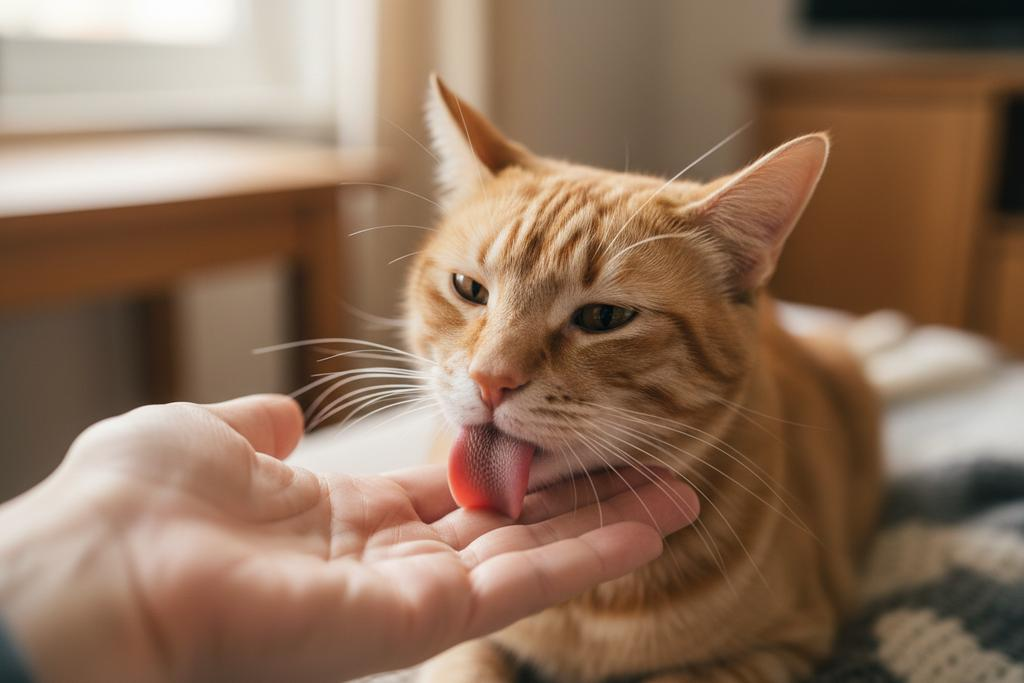
Why Does My Cat Lick Me? 7 Reasons Explained
Have you ever been relaxing on the sofa when your cat suddenly starts licking your hand, arm or even your face? Although it might feel a little strange (and sometimes rather rough!), cat licking is usually a perfectly normal behaviour.
So, why does my cat lick me?
There are several possible explanations. Your cat might be showing affection, strengthening its bond with you, grooming you as part of its social group or simply enjoying the taste of your skin. In some situations, licking can also be a sign of attention-seeking, stress or an underlying health problem.
Understanding why your cat licks you can help you better understand its behaviour and recognise when something might not be quite right.
Let’s look at seven common reasons behind this curious feline habit.
1. Your Cat Is Showing You Affection
One of the most common reasons cats lick their owners is to show affection.
When kittens are born, their mothers regularly lick them to clean them, provide comfort and strengthen their bond. Cats often carry this social behaviour into adulthood.
Adult cats also groom one another, a behaviour known as allogrooming. It is particularly common between cats that have developed a close relationship.
When your cat licks you, it may be treating you in much the same way it would another member of its feline family.
Think of it as a little feline kiss!
Although we cannot know exactly what a cat is thinking, licking combined with relaxed body language, purring and affectionate behaviour is often a good indication that your cat feels comfortable around you.
If your cat enjoys being stroked and groomed, a gentle grooming brush can be a great way to strengthen your bond. Regular brushing helps remove loose fur and gives your cat some positive attention. Choose a soft brush designed specifically for cats, particularly if your pet has a sensitive coat.
Check out cat grooming brushes on Amazon (Ad)
2. Your Cat Is Grooming You
Cats are naturally clean animals and spend a considerable amount of time grooming themselves.
Their rough tongues are covered in tiny backward-facing structures called papillae, which help remove loose hair, dirt and debris from their coats.
When your cat licks you, it may be attempting to groom you in the same way it would another cat.
This behaviour is particularly interesting because it suggests your cat sees you as part of its social group.
You might notice your cat licking your hands, arms or even your hair while you’re sitting together.
Don’t worry if you don’t receive the same treatment from your cat when you try to return the favour with a kiss!
Some cats enjoy the sensation of being brushed but aren’t keen on traditional grooming brushes. Grooming gloves can be a useful alternative, allowing you to stroke your cat while collecting loose hair at the same time.
See cat grooming gloves on Amazon (Ad)
3. Your Cat Likes the Taste of Your Skin
Not every lick is necessarily a sign of affection.
Sometimes, your cat simply likes the taste of your skin.
Human sweat contains salts that some cats find interesting. Your skin may also carry traces of food, natural oils or other scents that attract your feline friend.
For example, you might notice your cat licking your hands after preparing food or your arms after exercising.
However, there is something important to remember.
Never allow your cat to lick skin covered in lotions, creams, medications or other topical products unless you have checked that they are safe for cats.
Some human skincare products and medications contain ingredients that can be harmful or toxic to cats if swallowed.
If you suspect your cat has ingested a potentially harmful product, contact your veterinary practice promptly.
4. Your Cat Is Marking You With Its Scent
Cats use scent as an important way of communicating with one another.
They have scent glands around their cheeks, chin, paws and other areas of their bodies. They also use grooming and other social behaviours to exchange familiar scents.
When your cat licks you, it may be helping create a familiar shared scent that reinforces your relationship.
This is one reason why cats sometimes groom other cats they are particularly close to.
Your cat may therefore be treating you as an important member of its social group.
It isn’t necessarily trying to claim ownership of you in the way humans might imagine. Rather, scent sharing is one of several ways cats establish familiarity and social connections.
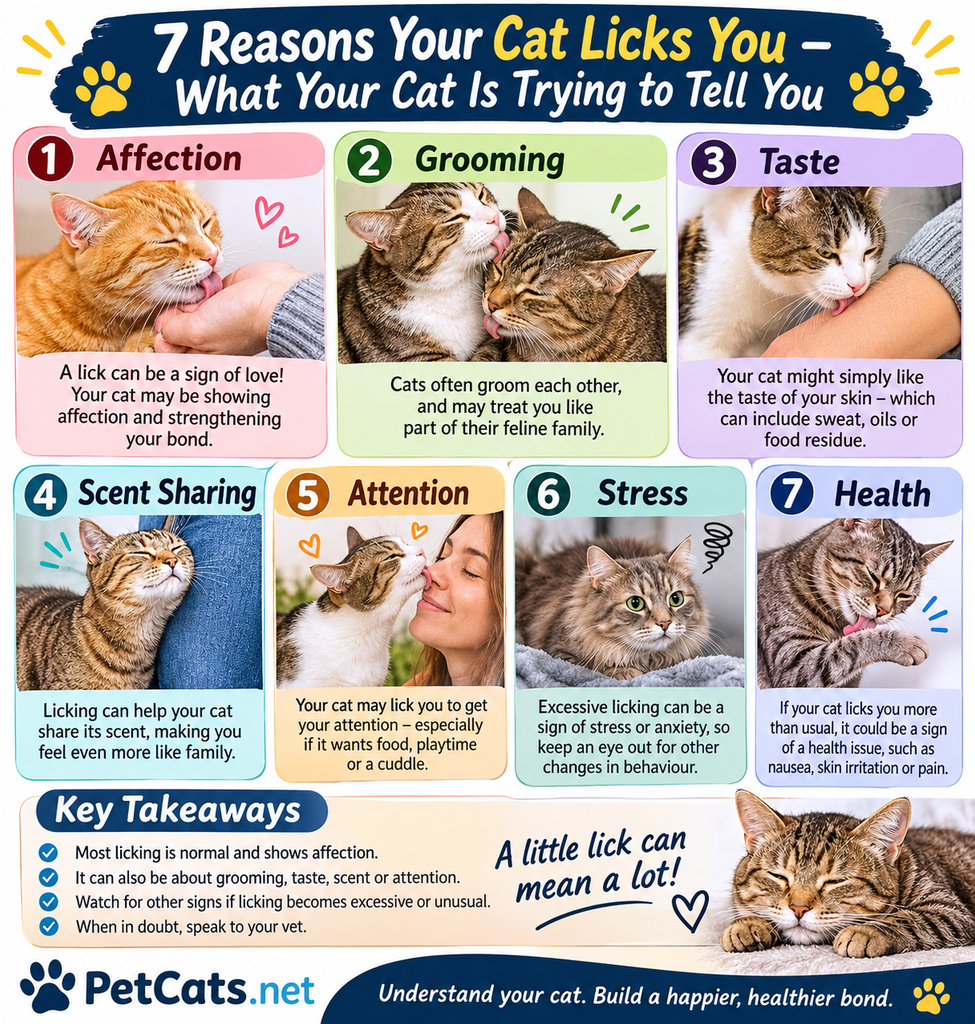
5. Your Cat Wants Your Attention
Cats are clever animals and quickly learn which behaviours get a reaction from their owners.
If your cat licks your hand and you respond by stroking it, talking to it or giving it attention, it may learn that licking is an effective way to get you to interact.
Over time, licking can become part of your cat’s routine whenever it wants attention.
You might notice this happening when:
- You’re sitting on the sofa.
- You’re working at your computer.
- You’re getting ready for bed.
- Your cat wants food or playtime.
- You’ve been ignoring your cat for a while.
If your cat regularly licks you when it wants something, consider whether it might be asking for attention rather than simply showing affection.
If your cat regularly licks you because it wants attention, interactive toys can help provide another outlet for its energy. Wand toys, puzzle feeders and treat-dispensing toys can encourage play and mental stimulation, particularly for indoor cats.
Browse interactive cat toys on Amazon (Ad)
6. Your Cat May Be Feeling Anxious or Stressed
Although licking is usually harmless, excessive licking can sometimes indicate that your cat is feeling stressed or anxious.
Grooming can be a self-soothing behaviour for cats, helping them cope with uncomfortable situations.
Changes to their surroundings, a new pet, visitors, moving house or changes to their normal routine can all contribute to stress.
Some cats may respond by grooming themselves excessively, while others may direct their licking towards their owners or objects around the home.
Look out for other signs of stress, including:
- Hiding more frequently.
- Changes in appetite.
- Increased aggression or irritability.
- Excessive grooming.
- Changes in litter tray habits.
- Avoiding interaction with family members.
If your cat’s behaviour changes suddenly or licking becomes persistent, speak to your vet to rule out medical problems and discuss possible causes of stress.
If your cat appears anxious, it is worth looking at ways to make its environment feel safer and more comfortable. Cat pheromone diffusers are one option some owners use to help manage stress-related behaviour. They aren’t a substitute for veterinary advice, particularly if the licking is new or excessive.
Explore cat calming diffusers on Amazon (Ad)
7. Your Cat Could Have an Underlying Health Problem
Occasional licking is generally nothing to worry about. However, a sudden increase in licking or repetitive behaviour should not automatically be dismissed as affection.
In some cases, excessive licking can be associated with nausea, pain, skin irritation or other medical conditions.
Pay particular attention if your cat:
- Starts licking you or objects much more frequently than usual.
- Develops bald patches from excessive self-grooming.
- Has red, irritated or damaged skin.
- Appears uncomfortable or restless.
- Stops eating or becomes less active.
- Shows other unusual changes in behaviour.
Cats are very good at hiding discomfort, so behavioural changes can sometimes be an early indication that something is wrong.
If you notice any of these signs, arrange a veterinary examination.
Why Does My Cat Lick Me and Then Bite Me?
This is something many cat owners experience.
Your cat might be happily licking your hand or arm before suddenly giving you a little nip.
There are several possible explanations.
Overstimulation: Your cat may become overwhelmed by physical contact and use a gentle bite to communicate that it has had enough.
Play behaviour: Some cats combine licking and gentle biting as part of their natural play behaviour.
Communication: Your cat might be signalling that it wants you to stop touching a particular area or give it some space.
Pay attention to your cat’s body language. Flattened ears, a flicking tail, tense muscles or sudden changes in posture can indicate that your cat is becoming uncomfortable.
If the behaviour becomes aggressive, frequent or appears to be associated with pain, consult your vet.
Why Does My Cat Lick My Face?
Cats sometimes lick their owners’ faces because they are comfortable with them and want to interact.
Your face also has natural oils, sweat and familiar scents that may interest your cat.
Some cats develop the habit of licking their owner’s nose, chin or cheeks, particularly when they are relaxing together or seeking attention.
Although it can be an affectionate interaction, it’s best not to encourage licking around your mouth, eyes or any broken skin.
Cats naturally carry bacteria in their mouths, and allowing them to lick wounds can increase the risk of infection.
Is It Safe to Let My Cat Lick Me?
In most cases, occasional licking of intact skin is unlikely to cause problems for healthy adults.
However, there are some precautions worth taking.
- Avoid allowing cats to lick open wounds, cuts or scratches.
- Discourage licking around your mouth and eyes.
- Wash your hands after handling your cat.
- Never allow licking of potentially toxic creams or medications.
- Be particularly cautious if you have a weakened immune system.
If your cat has licked broken skin, wash the area thoroughly with soap and water. Seek medical advice if the area becomes red, swollen or painful.
How Can I Stop My Cat From Licking Me?
Not everyone enjoys being licked by their cat, particularly when that rough tongue starts working away at their skin!
If you’d prefer to discourage the behaviour, there are several gentle approaches.
1. Redirect their attention
When your cat starts licking, try offering a favourite toy or engaging it in a short play session.
2. Give them something else to do
Puzzle feeders, scratching posts, climbing trees and interactive toys can help provide stimulation and reduce boredom.
3. Reward alternative behaviour
When your cat interacts with you without licking, reward it with attention, praise or play.
4. Avoid punishment
Never shout at, hit or physically punish your cat for licking. This can increase stress and damage the trust you’ve built with your pet.
5. Watch for changes
If licking is excessive, new or accompanied by other unusual behaviours, arrange a veterinary check-up.
Remember, occasional licking is usually a normal part of feline social behaviour. The aim is to gently redirect unwanted licking rather than punish your cat for expressing itself.
Frequently Asked Questions About Cats Licking Their Owners
Does my cat lick me because it loves me?
It may do. Licking is often associated with social grooming and bonding between cats. If your cat licks you while displaying relaxed, affectionate body language, it may be expressing trust and social attachment.
Why does my cat lick me when I’m sleeping?
Your cat may be seeking attention, responding to your scent or simply taking the opportunity to interact with you while you’re lying still. Some cats also develop routines of grooming their owners when they settle down for the night.
Why does my cat lick my hand?
Your hands carry familiar scents and may have traces of food, sweat or other interesting smells. Your cat may also be grooming you as part of its social bonding behaviour.
Why does my cat lick me while purring?
Purring and licking together often occur during relaxed social interactions. Your cat may be showing affection, seeking attention or enjoying the comfort of being close to you.
However, purring can also occur in other situations, including when a cat is uncomfortable, so consider its overall body language.
Why does my cat lick me and then fall asleep?
Your cat may find your presence comforting. Licking can be part of a relaxing social interaction, and settling down to sleep afterwards may simply mean your cat feels safe and comfortable around you.
Do cats lick their owners to show dominance?
Licking is not generally considered a reliable sign of dominance. It is more commonly associated with grooming, social bonding, scent sharing and attention-seeking.
Should I let my cat lick my face?
It’s better to discourage licking around your mouth, eyes and any broken skin. Although most interactions are harmless, cats carry bacteria in their mouths that can cause infections.
Final Thoughts: Why Does My Cat Lick Me?
So, why does your cat lick you?
In most cases, it’s likely to be a combination of affection, grooming, social bonding, scent sharing and attention-seeking.
It’s one of the many fascinating ways cats communicate with the people they share their homes with.
Occasional licking is generally nothing to worry about. However, if your cat suddenly starts licking excessively or develops other unusual behaviours, it’s always worth speaking to your vet.
After all, understanding your cat’s behaviour is one of the best ways to build a happy, healthy relationship with your feline companion.
A little lick from your cat might just be its way of saying you’re part of the family!
Leave a Reply